Rancho Cordova, CA · Garage Door Service
The Doors Rancho Cordova Built Before Anyone Insulated a Garage
Most Rancho Cordova garage doors date to 1962-2004, built before insulation codes existed, which matters once summer heat hits an uninsulated steel panel.
- Repairs & new doors
- Springs & openers
- Serving 5 nearby communities
The Problem
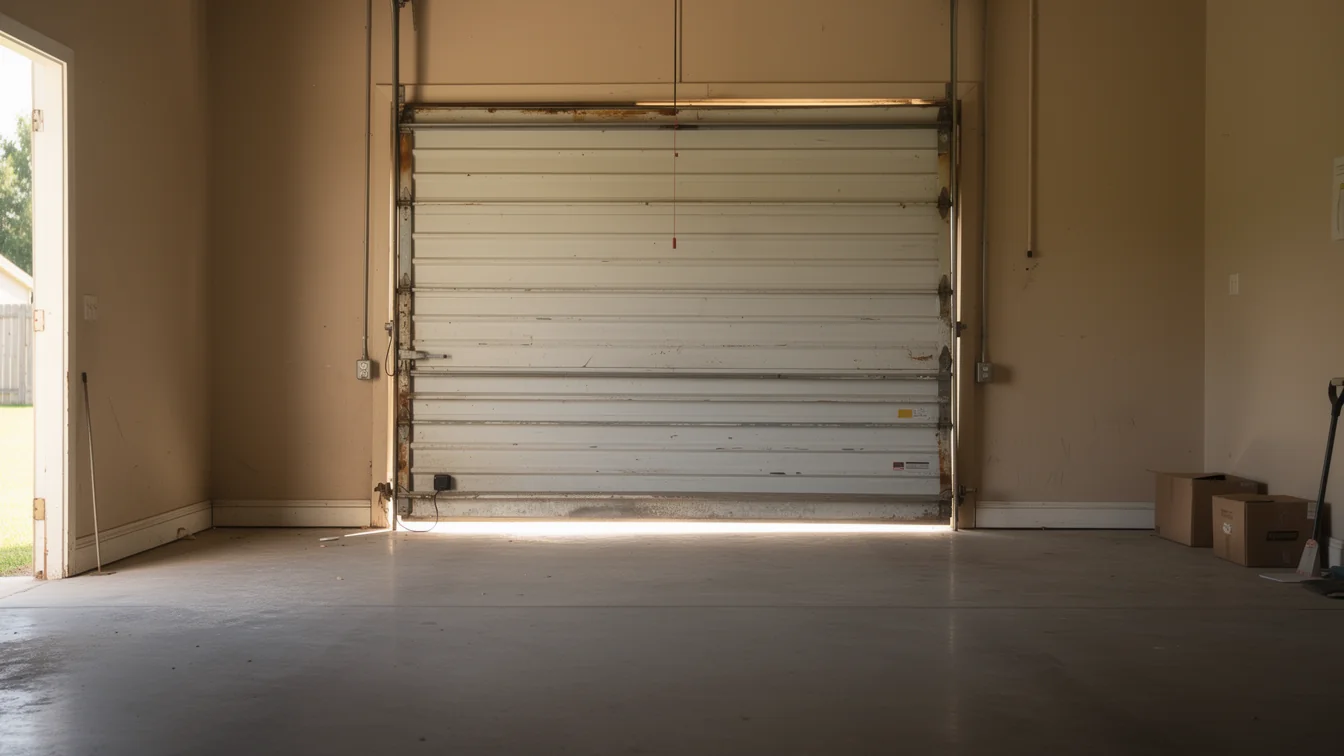
Most of the garage doors we open up in Rancho Cordova were hung on houses built between 1962 and 2004, with the median landing around 1982. That matters because insulated steel doors weren't the standard option back then - a lot of what went up in that window is a single layer of steel or aluminum over an open frame, nothing behind it, no thermal break at the track. It wasn't a mistake. It's just what the builders in this part of the valley were putting in at the time.
The result shows up now, decades later, as a door that's heavy, loud, and does nothing to stop outside temperature from becoming garage temperature. If your garage doubles as a workshop, a laundry spot, or storage for anything that doesn't like heat, that single layer of steel is the reason the room runs hotter than the rest of the house. We see this pattern across the stock from the 1980s and 90s especially, which still makes up most of what's out there in this area - original panel, original hardware, no insulation layer ever added.
What Changes With the Season
Summer is when the gap between an insulated and uninsulated door actually costs you something. A door with no insulation layer doesn't block radiant heat - it absorbs it on the outside face and passes a good share of it straight through to the inside. On a house from the 1962-2004 build window, that means the garage becomes one of the hottest rooms on the property by afternoon, and anything mechanical stored in there - the opener motor included - is working in that heat all day.
The opener itself feels the season too. Older openers paired with these original doors weren't built with today's thermal cutoffs, and repeated heat cycling wears bearings and belt tension faster than it would on a shaded, insulated setup. Cold snaps matter less here than the long stretch of severe summer heat that this area sits under - that's the load the hardware actually has to survive year after year, not a single hot week but months of it.
What the Weather Here Does to It
Rancho Cordova falls in a climate band rated severe for heat, and an uninsulated steel panel is a poor match for that. Steel expands under direct sun, and on a single-layer door with no insulation core to buffer it, that expansion shows up as a track that binds, rollers that start grinding on one side before the other, or a panel seam that opens up slightly and never quite closes the same way again.
Lubricant breaks down faster under sustained heat too. Torsion springs and rollers that would hold grease for a season somewhere cooler dry out quicker here, which is part of why a spring that looked fine in spring starts squealing or failing by late summer. None of this is damage from one bad day - it's the slow wear that comes from asking a 1980s-era, uninsulated door to handle a heat load it wasn't built for, every summer, for forty years running.
What You Pay
We're not going to put a number on this page that doesn't belong here - what a repair or a full insulated replacement runs depends on the door, the opener, and what's actually failing, and we won't guess at that sight unseen. What we can tell you is the context: across this service area there are 87,879 owner-occupied houses, most sharing that same 1962-2004 build era and the same uninsulated panel problem, and a median household income of $96,934, which is enough that a full replacement with an insulated door is a realistic option for most owners here rather than a stretch.
That's the honest trade-off we lay out on every call: patch an old single-layer panel and you're buying a few more years out of hardware that's already past its design life in this heat, or replace it with an insulated door and stop fighting the same seasonal wear every summer. Neither answer is wrong - it depends on the door in front of us, and we'll tell you straight which one makes sense before you spend anything.
Frequently asked questions
Why does my garage get so hot in the afternoon even with the door shut?
If your house was built in the 1962-2004 window common to this area, there's a good chance the door is a single layer of steel with no insulation core. That panel absorbs direct heat all afternoon and passes a lot of it straight through, which is why the garage runs hotter than the rest of the house in a climate rated severe for heat.
Is it worth insulating an old door instead of replacing it?
Sometimes - it depends on the door's condition and the track hardware underneath it. If the panel and rollers are otherwise sound, an insulated retrofit kit can help. If the door is already warping or binding from heat cycling, you're usually better off replacing it than adding insulation to a frame that's already wearing out.
How do I know if my door is original to the house?
If the house dates to the 1980s or 90s, which covers most of the stock in this area, and the door has never been swapped, it's almost certainly the original single-layer panel. Look for an open frame on the inside face with no foam or sandwich panel - that's the tell.
Related garage door services in Rancho Cordova
More garage door guides
Book garage door service in Rancho Cordova
Call now or request a quote - tell us what the door is doing and where you are.