
Rancho Cordova, CA · Garage Door Service
Garage Door Maintenance for Rancho Cordova Homes
Garage door maintenance in Rancho Cordova, CA for homes built 1962-2004, where severe summer heat wears down springs, openers and rollers fast year-round.
- Repairs & new doors
- Springs & openers
- Serving 5 nearby communities
How We Fix It
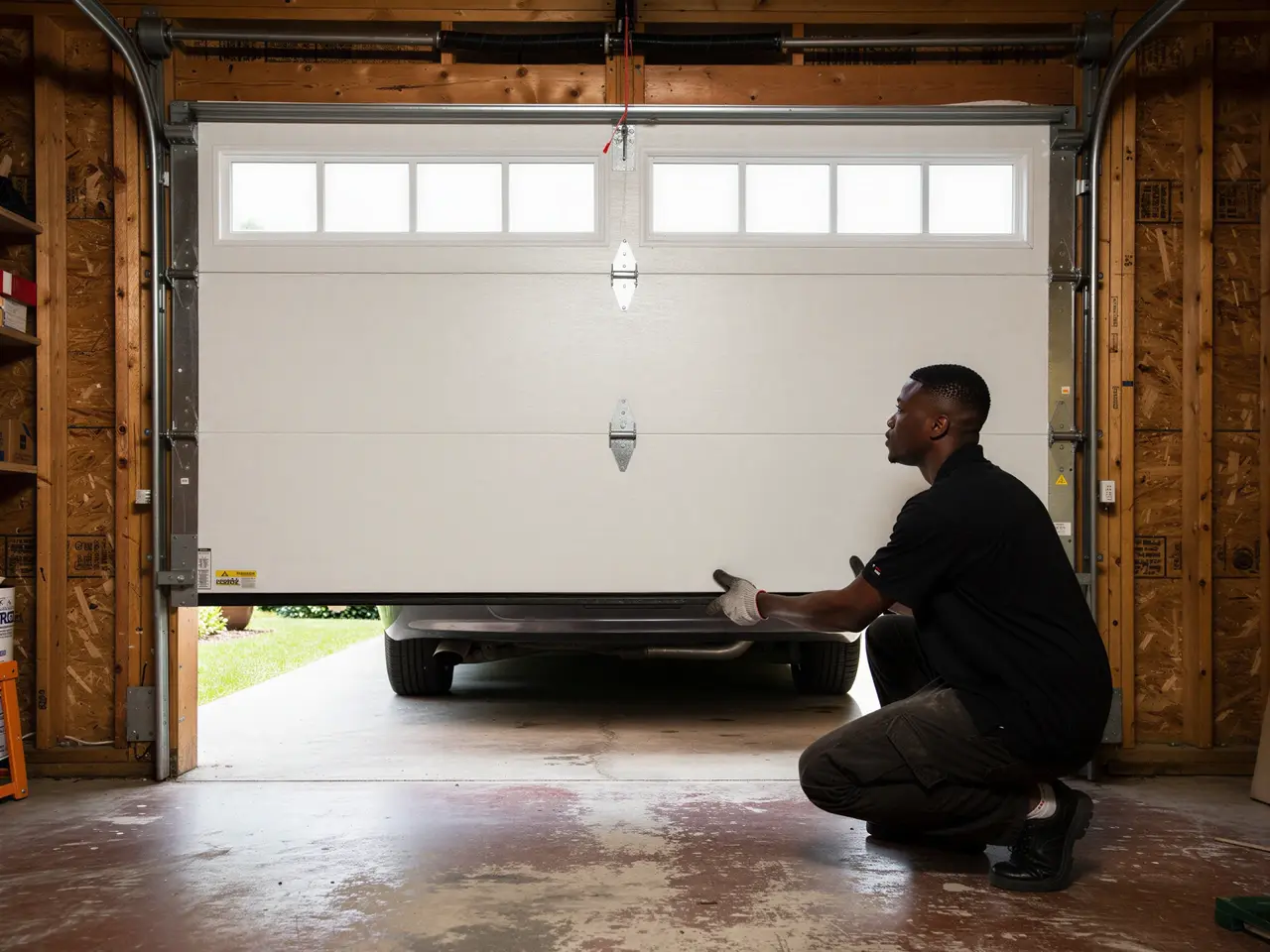
A maintenance visit on a Rancho Cordova door isn't a once-over with a grease can. We check spring tension against the door's actual weight, run the track alignment on both sides, look at every roller and the cable condition at the drum, and test the opener's force and travel limits so it stops and reverses where it should. Most of the houses we work on here were built between 1962 and 2004, with the median landing around 1982 - that's a big spread of hardware generations, from steel torsion springs on older side-mount setups to the extension-spring and belt-drive combos that showed up in the 1990s builds. We adjust for whichever one is on your door rather than applying one checklist to all of them. We lubricate hinges, rollers and the spring itself with a product rated for sustained heat, not a general-purpose spray that breaks down by August. We also torque down the hardware at the track brackets, which loosens over time from the same heat-expansion cycle that affects the spring. None of this is a 20-minute job if it's done right - a real tune-up on a door with 1980s-era hardware usually runs closer to 45 minutes once we're actually testing balance and not just looking at it.
The Complications
The straightforward part of maintenance is the labor. The complication is parts. A door from the 1970s or early 1980s may have a spring size or a roller bracket that isn't a stock item anymore, and if a tune-up turns up a cracked panel or a worn cable on one of those older doors, we may need to order the part rather than swap it on the spot. We'll tell you that up front instead of pretending a universal part is a perfect fit - it isn't always, and forcing one on can throw off the balance worse than leaving the original alone. The other complication is scheduling around what the door actually needs versus what's convenient. Across the wider service area, median household income runs around $96,934 with roughly 87,879 owner-occupied houses out of 176,046 households total, which tells us this is a region where people maintain what they own rather than replace it at the first squeak - so we treat a maintenance call as an inspection first, repair recommendation second, not a sales pitch for a new door. If a door's spring and hardware are original and show real wear, we'll say so plainly rather than stretch another season out of a part that's done.
How It Shows Up
On a 1960s-80s door, the first sign is usually sound before it's failure - a grinding or popping noise at the spring, a track that rattles instead of sliding the rollers through, or an opener that strains and pauses partway up. On the newer end of the local housing stock, from the 1990s and early 2000s builds, the complaint is more often a door that reverses for no reason, which usually traces back to opener limit settings drifting rather than the hardware itself. Uneven closing - one side touching down before the other - shows up on both eras but for different reasons: older torsion springs losing tension unevenly, or newer cable fraying at one drum faster than the other. Heat plays a role across the board. This area sits in a severe heat climate band, and that heat cycles steel expansion and contraction on the spring and track daily through the summer months, which is exactly the kind of stress that turns a quiet door into a noisy one over a season, not a decade.
Why This Fails Locally
The reason maintenance matters more here than in a newer subdivision somewhere else is the combination of build era and climate. A large share of the 26 named areas in this service region carry 1980s-90s housing stock, which means the springs and openers on a lot of doors are already decades past their original install and were never rated for the summer heat load they're carrying now. Severe heat doesn't just make a day uncomfortable - it's the daily expansion-contraction cycle on steel hardware that shortens spring life and dries out lubricant faster than a mild climate would. Put a 1982-median build year next to a severe heat band and you get a predictable failure pattern: springs that lose tension years before a manufacturer's chart would suggest, and openers straining against doors that no longer balance the way they did when installed. Mather sits three miles out, Gold River four, Fair Oaks five - and the housing in each of those rings traces the same build window as the rest of this area, which is why a maintenance schedule built around the local climate and the local housing age does more here than a generic once-a-year tune-up would.
Frequently asked questions
How often should a garage door actually get serviced in Rancho Cordova?
With severe summer heat cycling the hardware daily, we recommend a check before the heat really sets in and again heading into winter - roughly twice a year rather than the annual schedule that's fine in a milder climate. Doors on original 1980s hardware benefit most from the more frequent check since the spring tension drifts faster under that heat load.
Will maintenance fix a door that's already making noise?
Sometimes. If the noise is from dry hinges or a loose track bracket, a tune-up usually solves it. If it's a spring that's lost tension or a cable fraying at the drum, maintenance will catch it and tell us what needs replacing, but it won't fix a part that's already worn out - that's a repair, not a tune-up.
Do you stock parts for older garage doors built in the 1960s-80s?
Not always on the truck. Some spring sizes and bracket styles from that era aren't common stock anymore, so if a tune-up on an older door turns up a part that needs replacing, we may need to order it rather than finish the same visit. We'll tell you that during the inspection, not after.
Is maintenance worth it if my opener still seems to work fine?
Yes, because an opener that's straining to lift an unbalanced door will wear out faster and masks the real problem, which is usually spring tension. Catching that early is cheaper than replacing an opener motor that burned out compensating for a door that was never rebalanced.
Related services
By Neighborhood
Maintenance across the Rancho Cordova area
We also handle maintenance in these Rancho Cordova-area suburbs.
Book garage door service in Rancho Cordova
Call now or request a quote - tell us what the door is doing and where you are.