Rancho Cordova, CA · Garage Door Service
Garage Door Spring Repair, Built for Rancho Cordova's Housing Stock
Torsion and extension spring repair for Rancho Cordova homes built 1962-2004, where original hardware and summer heat push springs past their rated cycles.
- Repairs & new doors
- Springs & openers
- Serving 5 nearby communities
How We Fix It
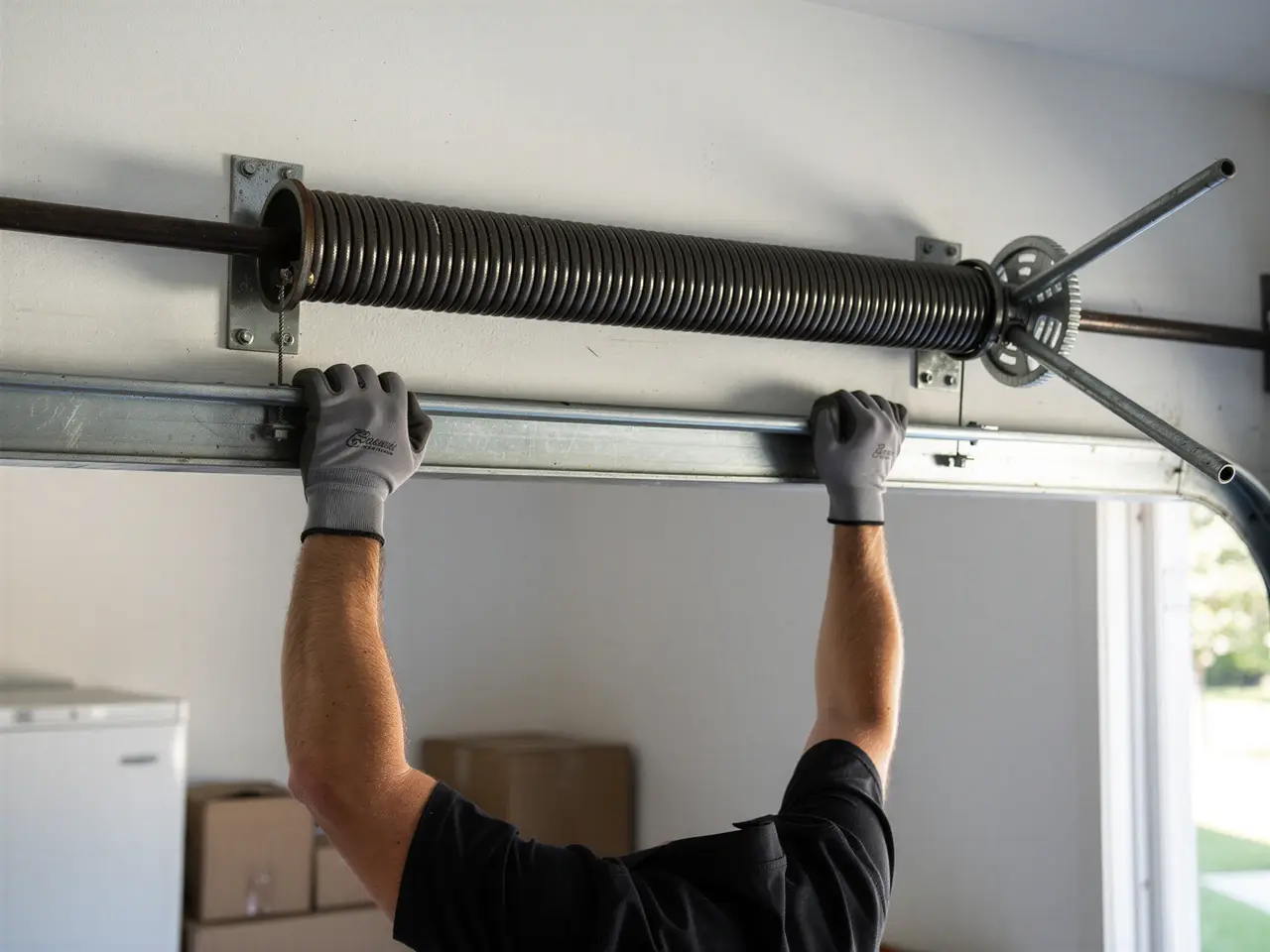
A broken torsion spring on a double door is a weight problem before it's a tool problem. We size the new spring to the door's actual weight and track geometry, not just swap in whatever's close, because a mismatched wind count leaves the door heavy on one side and strains the opener within months. On jobs with two torsion springs, we replace both even if only one snapped - the surviving spring has logged the same cycles and fails next, usually on a Saturday. For extension-spring setups, still common on older single-car doors across the service area, we check the safety cables at the same time, since a frayed cable on a loaded spring is the part that actually hurts someone. We set spring tension by hand, test the door at the midpoint - it should hold position on its own - and leave the opener's force settings alone, since an opener fighting an out-of-balance door is a spring problem wearing an opener costume. One limit worth saying plainly: if the torsion tube or bearing plate is rusted through, that's a track job first, and the spring work waits until the bar is sound.
The Complications
Springs are rated in cycles, not years, and heat shortens that rating. In the climate band this service area sits in, summer heat is severe, and steel loses temper faster when a garage runs hot for months at a stretch. A spring that might last 10,000 cycles in a mild climate can come in well under that here, especially on an attached garage with no venting. The complication locally is housing age: most of the stock across the 26 named areas we work in was built in the 1980s and 90s, and a lot of those original springs have never been replaced - they're original to a door installed when Reagan was in office. Original springs on 30-to-40-year-old torsion hardware are often undersized by today's standard, because door weight specs and spring charts have shifted since then. That means a straight swap-in of the old part size is sometimes the wrong fix, even though it looks like the obvious one. We also run into oversized single springs on older single-door setups that were never upgraded to the dual-spring standard - fine until the one spring goes and the door won't budge at all.
How It Shows Up
The door gets heavy before it breaks. You'll notice the opener straining, a slower close, or a loud bang from the garage that turns out to be the spring letting go rather than anything hitting the door. Sometimes it's quieter: the door opens a foot and stalls, or it closes unevenly, dropping faster on one side because one torsion spring is still intact and the other isn't carrying its share. On extension-spring doors, the sign is often a door that won't stay up on its own - you lift it, and it drifts back down, which means the springs have lost enough tension to no longer counterbalance the panel weight. None of these are safe to force past. A door under uneven spring load can jump the track, and a cable under tension that lets go is not something you want to be standing near.
Why This Fails Locally
Put the two facts together: housing built mostly in the 1962-2004 window with a median year of 1982, and a climate band where summer heat is rated severe. That combination means a large share of the roughly 87,879 owner-occupied houses in this service area are running springs that are both old by cycle count and stressed by heat for a good chunk of the year. It's not a dramatic failure - it's a slow one, and it tends to go unnoticed until the door won't open. Median household income here runs around $96,934, which is relevant mainly because it means most owners are fixing a spring, not financing a full door replacement, and a spring job is usually the right call unless the track or panels are also failing. We'd rather tell you that than sell you a door you don't need.
Frequently asked questions
How long does a torsion spring actually last on a garage door around here?
It depends on cycles and heat exposure more than age alone. Given the severe summer heat in this area, springs on an unvented attached garage often wear faster than the cycle rating would suggest in a milder climate. If your door is original to a house built in the 1980s or 90s, which is most of the stock here, the spring is probably due.
Do you replace one spring or both on a double door?
Both, in almost every case. If one torsion spring has broken, the other has logged the same number of cycles and the same heat exposure, and it's usually close behind. Replacing just the broken one means a return trip within months and a door that runs unevenly in the meantime.
My door won't stay open on its own - is that the spring?
Likely yes. On extension-spring setups especially, a door that lifts and then drifts back down has lost spring tension and isn't counterbalancing the panel weight anymore. Don't force it open and prop it - get the spring tension checked before the cable or track takes the extra strain.
By Neighborhood
Spring Repair across the Rancho Cordova area
We also handle spring repair in these Rancho Cordova-area suburbs.
Book garage door service in Rancho Cordova
Call now or request a quote - tell us what the door is doing and where you are.