Rancho Cordova, CA · Garage Door Service
What That Grinding or Popping Sound Is Actually Telling You
In Rancho Cordova, most houses date to 1962-2004 - grinding, popping, or slapping sounds usually mean original hardware worn out by decades of valley heat.
- Repairs & new doors
- Springs & openers
- Serving 5 nearby communities
The Problem
Most homes in Rancho Cordova and the surrounding area went up between 1962 and 2004, with the heaviest building in the 1980s and 90s, matching the pattern across the 26 named communities out this way, from Mather and Gold River to Fair Oaks and beyond. That means a lot of torsion springs, rollers, and openers are thirty to forty years into a job they were built to do for maybe ten to fifteen. A grind on the way up, a clunk at the top of travel, a pop from one side of the door while the other stays quiet - these aren't random. They're a part telling you it's near the end of its rated cycles.
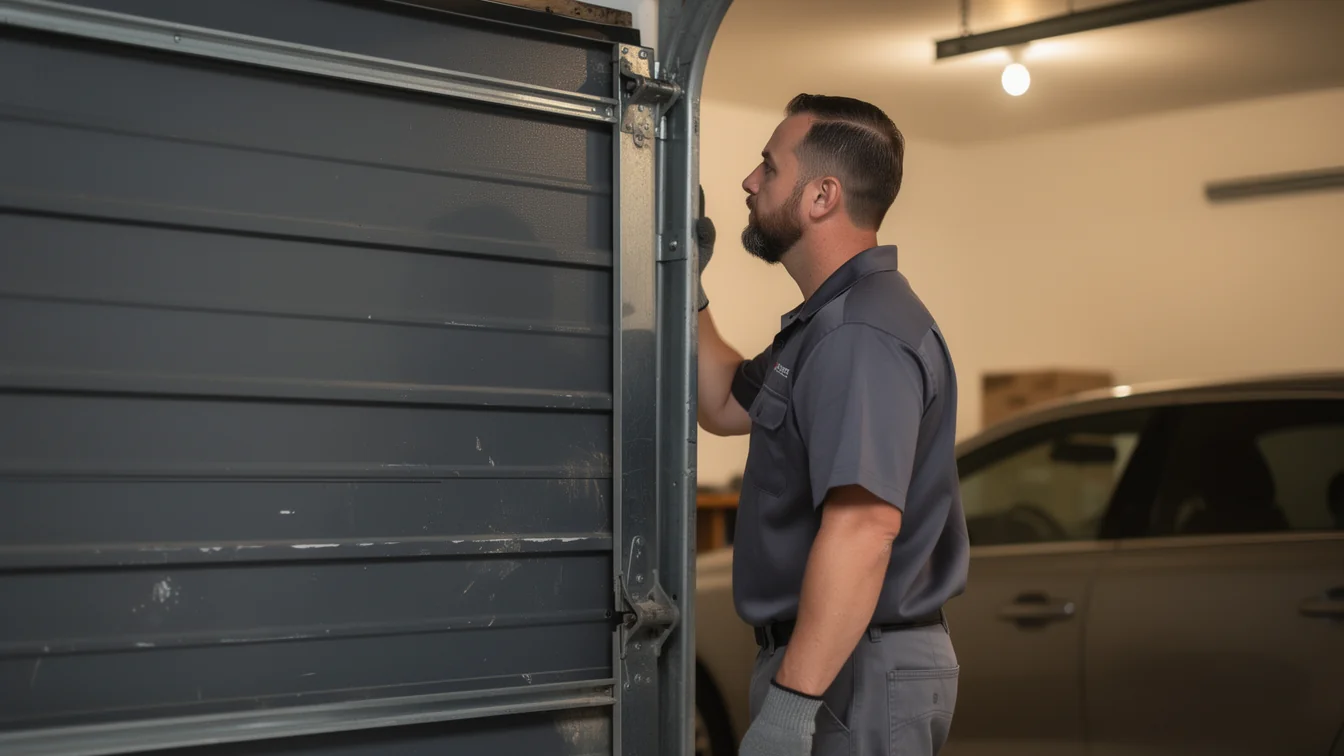
We can't always tell you which part from a phone description. A grinding sound could be a dry roller or a spring that's about to let go; a slapping sound could be a loose cable or a bent track. Pinning it down means someone looking at the door in person, which is the one honest limit here - we're not going to guess at a fix over the phone and charge you for being wrong.
What Changes With the Season
This area sits in a severe-heat climate band, and that shows up in the hardware twice a year rather than once. Through the hot months, metal parts expand - tracks can bind slightly, and the grease in an old opener's drive gear or on a torsion spring's coils thins out and runs off faster than it would somewhere milder. That's when doors that have been fine all spring suddenly start grinding or hesitating partway up.
Then comes the other end of the swing. Once temperatures drop back down, everything contracts again, and a spring or cable that stretched slightly under heat-softened tension doesn't always return to its original shape. Owners in houses from the 1962-2004 building wave tend to notice this most, because the original torsion hardware wasn't built with forty more years of heat cycling in mind. If your door has gotten noisier specifically as the weather's turned, that timing is the clue, not a coincidence.
What the Weather Here Does to It
Severe heat is hard on a garage door in ways that aren't obvious until something breaks. Torsion springs lose temper faster when they're cycling through high heat day after day - the metal fatigues, and a spring rated for a certain number of cycles can fall short of that number simply because it spent its life in this climate band instead of a cooler one. Nylon rollers get brittle and crack. Opener circuit boards and sensors, especially ones sitting in an uninsulated garage that bakes all afternoon, fail more often than the same parts would somewhere with milder summers.
For the older housing stock in this area - plenty of it dating to the 1960s through the 1990s - the garage itself often wasn't built with much insulation or ventilation, since that wasn't code or common practice at the time. That makes the heat problem worse indoors than the outside temperature alone would suggest. A door that bangs or shudders only in July and August, and runs fine the rest of the year, is giving you a direct read on how much that heat is costing the hardware.
What You Pay
We don't have a flat number to hand you here, because what a noisy door needs ranges from a $20 roller swap to a full spring and cable job, and the only honest way to know is to look at the door. What we can tell you is what drives the cost: whether it's one part or several worn at once, whether the opener needs attention alongside the door itself, and how long the original hardware has been running past its rated life in a climate that's hard on metal and plastic alike.
Given the median household income in this area sits well above $90,000, most owners we talk to are weighing a repair against the cost of just living with the noise a while longer - and that's a reasonable thing to weigh. A worn roller or a loose cable bracket is cheap to fix and dangerous to ignore. A spring at the end of its cycle life on a double door is not a DIY call. If a door's noise has shown up alongside visible wear - a flat spot on a roller, a frayed cable, a spring with a visible gap in a coil - that's the one that needs a call sooner rather than later.
Frequently asked questions
Why does my garage door only grind in the summer?
Heat thins the lubricant on rollers, tracks, and torsion springs faster than it does in milder climates, and metal parts expand slightly under high temperatures. If your door only gets noisy once the weather turns hot, that's the hardware telling you the heat is working on it, not a separate problem showing up by coincidence.
Is a popping sound always the spring?
Not always. A pop can be a torsion spring, a loose cable fitting, or even a track bracket that's worked itself slightly loose over the years. Given how much of the housing stock here dates to the 1960s through 1990s, a lot of this hardware is original, so age is usually part of the story either way.
How old does a garage door opener usually get before it starts making noise?
It depends on use and on how much heat it's cycled through, but openers original to houses built in the 1980s and 90s are well past a normal service life by now. A grinding drive gear or an opener that strains audibly on the way up is common in houses from that era.
Should I just oil the noisy parts myself?
Lubricating rollers and hinges is fine as routine upkeep, but it won't fix a spring that's fatigued from years of heat cycling or a roller that's already cracked. If the noise persists after a basic oiling, that's usually a sign the part itself needs replacing, not just more grease.
Related garage door services in Rancho Cordova
More garage door guides
Book garage door service in Rancho Cordova
Call now or request a quote - tell us what the door is doing and where you are.