Rancho Cordova, CA · Garage Door Service
Garage Door Repair for Rancho Cordova Homes
Rancho Cordova homes built 1962-2004 face torsion spring failure and opener strain from severe summer heat, especially on older tracks and worn rollers.
- Repairs & new doors
- Springs & openers
- Serving 5 nearby communities
How We Fix It
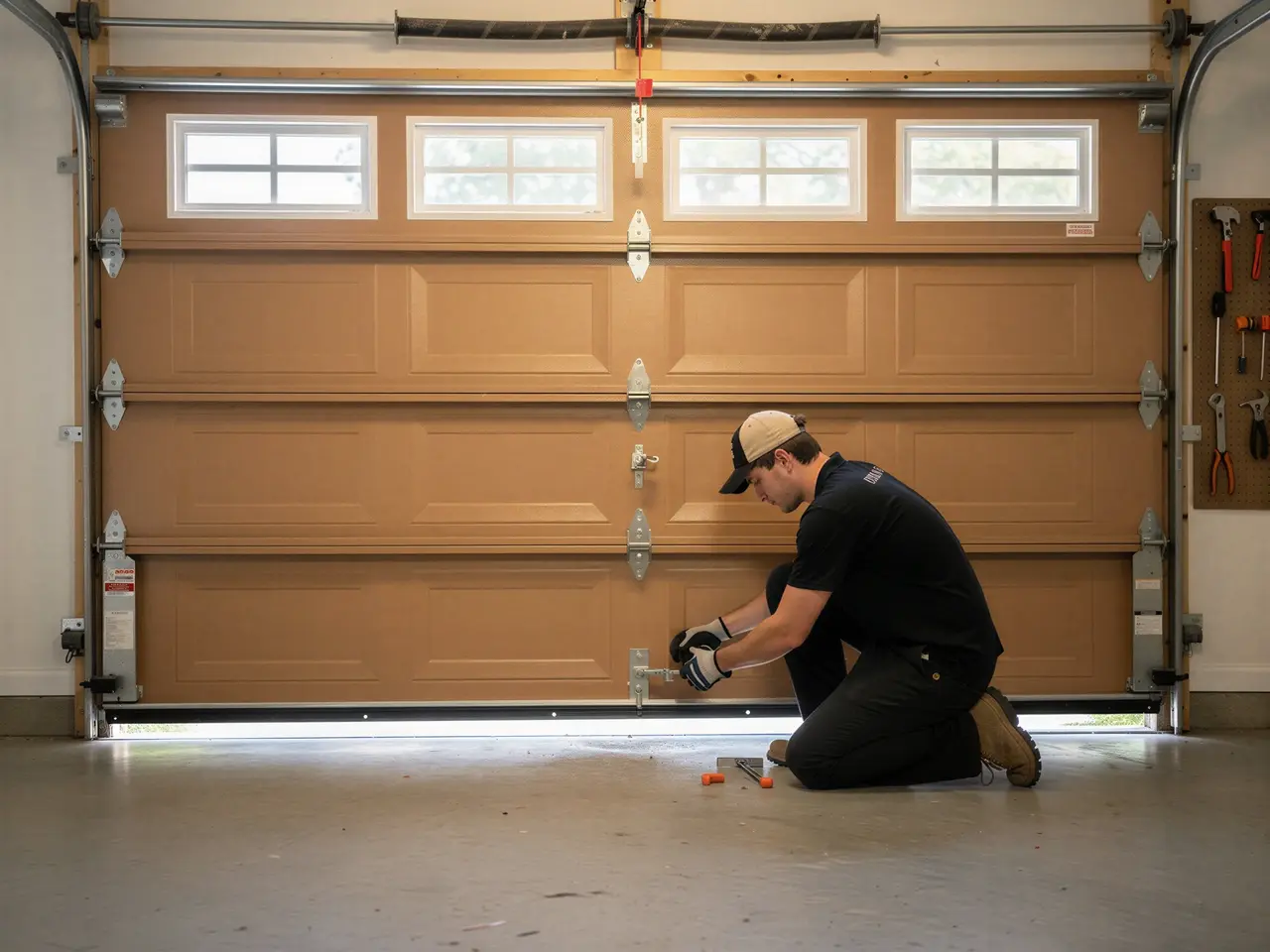
Most calls start the same way: a door that won't open, won't close all the way, or slams the last six inches. We check the torsion spring first, since the bulk of Rancho Cordova's housing stock dates from 1962 to 2004, with a median build year around 1982 - that puts a lot of original or first-replacement springs well past their wind-cycle life. We pull the door off auto-cycle, check cable tension, and inspect the track for the kind of warping that comes from repeated heat expansion rather than age alone. If the opener is the problem, we test the logic board and the travel limits before we touch the motor, because in a severe-heat climate band like this one, heat-stressed capacitors and sensors fail before the motor itself does. We true the track, replace rollers that have gone oval, and reset spring tension by hand rather than guessing off a chart built for a different door weight. We don't sell a full system replacement when a spring and a roller set will get the door back to quiet, balanced operation.
The Complications
The tricky part of repair work here isn't the spring itself, it's matching it. Houses built across the 1962-2004 window, and especially the dense run of 1980s and 90s construction common across the area's 26 named neighborhoods, came with a wide range of track widths and spring wind counts that newer parts don't always match off the shelf. A door from an early-80s build might take a different drum size than one three streets over from a late-90s phase. We carry common sizes on the truck, but an uncommon wind count or an obsolete track bracket can mean a special order, and that's a day or two we're honest about up front rather than promising a same-day fix we can't back. We also won't force a universal spring onto hardware it wasn't built for just to close out a job faster - that's how a door comes down on someone's car a year later.
How It Shows Up
The first sign is usually noise - a bang partway through the close cycle, or a grinding sound as a worn roller drags through a track that's expanded slightly out of true. In a severe-heat climate, steel track and the fasteners holding it to the jamb go through more expansion and contraction than most owners realize, and over twenty or thirty summers that cycling loosens brackets and throws the door out of square by a fraction of an inch - enough to bind a roller. Other owners notice the opener straining, clicking twice before it catches, or reversing on close without touching anything. That's often a spring that's lost enough tension that the opener is doing work it was never sized to do, which burns out drive gears faster than normal use would.
Why This Fails Locally
Rancho Cordova's housing is concentrated in a fairly narrow build window - 1962 through 2004, with the bulk of it going up in the 1980s and 90s - so a large share of the area's 87,879 owner-occupied houses are carrying original or early-replacement garage hardware that's now thirty to fifty years into a severe-heat climate. That combination of age and thermal stress is what drives the repair pattern we see: springs that fatigue faster than the national average life expectancy, and tracks that work loose from decades of expansion. With median household income here at $96,934, most owners can afford a proper repair instead of a patch job, which is part of why we don't push replacement unless the frame or panel is actually damaged - a spring and roller job on a sound door is usually the right call, not a sales opportunity. The service area spans from close-in neighborhoods near Mather, about three miles off, out past Gold River and Fair Oaks, and the housing age pattern holds fairly steady across that stretch.
Frequently asked questions
Why does my garage door spring keep breaking?
Torsion springs are rated for a set number of open-close cycles, and heat cycling speeds up metal fatigue. In a severe-heat area like this one, a spring installed in the 1980s or 90s is likely well past its expected life, so repeated breaks usually mean it's time for a full spring replacement, not another patch.
How fast can you get parts for an older door?
Common spring and roller sizes are on the truck. If your door dates to an early build phase with an uncommon track width or drum size, we may need to special order, which can take a few days. We'll tell you up front rather than guess.
Is it worth repairing an original door from the 1980s or 90s?
Usually yes, if the frame and panels are sound. A new spring, cable set, and rollers can bring a thirty-year-old door back to quiet, balanced operation for a fraction of replacement cost. We only recommend replacement when the panel is dented, rusted through, or the track bracket has pulled from the jamb.
Why is my opener straining on hot afternoons?
A weak or aging spring makes the opener lift more of the door's weight than it was built for, and heat adds extra strain on the motor and drive gears. If the opener is clicking or reversing, check the spring tension before replacing the opener itself.
Related services
By Neighborhood
Garage Door Repair across the Rancho Cordova area
We also handle garage door repair in these Rancho Cordova-area suburbs.
Book garage door service in Rancho Cordova
Call now or request a quote - tell us what the door is doing and where you are.