
Rancho Cordova, CA · Garage Door Service
Roller Replacement for Rosemont's 1970s Garage Doors
Rosemont's houses mostly went up around 1976, six years ahead of the service area's 1982 median - meaning different track gauge and roller wear than newer Rancho Cordova stock.
- Repairs & new doors
- Springs & openers
- Serving 5 nearby communities
Doing It Yourself
Rosemont sits about 7 miles from our Rancho Cordova shop, and the houses out here skew older than the rest of the area we cover. Median build year across the broader service territory lands around 1982, but Rosemont's housing stock centers closer to 1976. Six years doesn't sound like much until you're standing in front of the door. Those mid-70s builds often came with narrower track gauge and steel rollers riding on hardware that's never been swapped, just greased over and over.
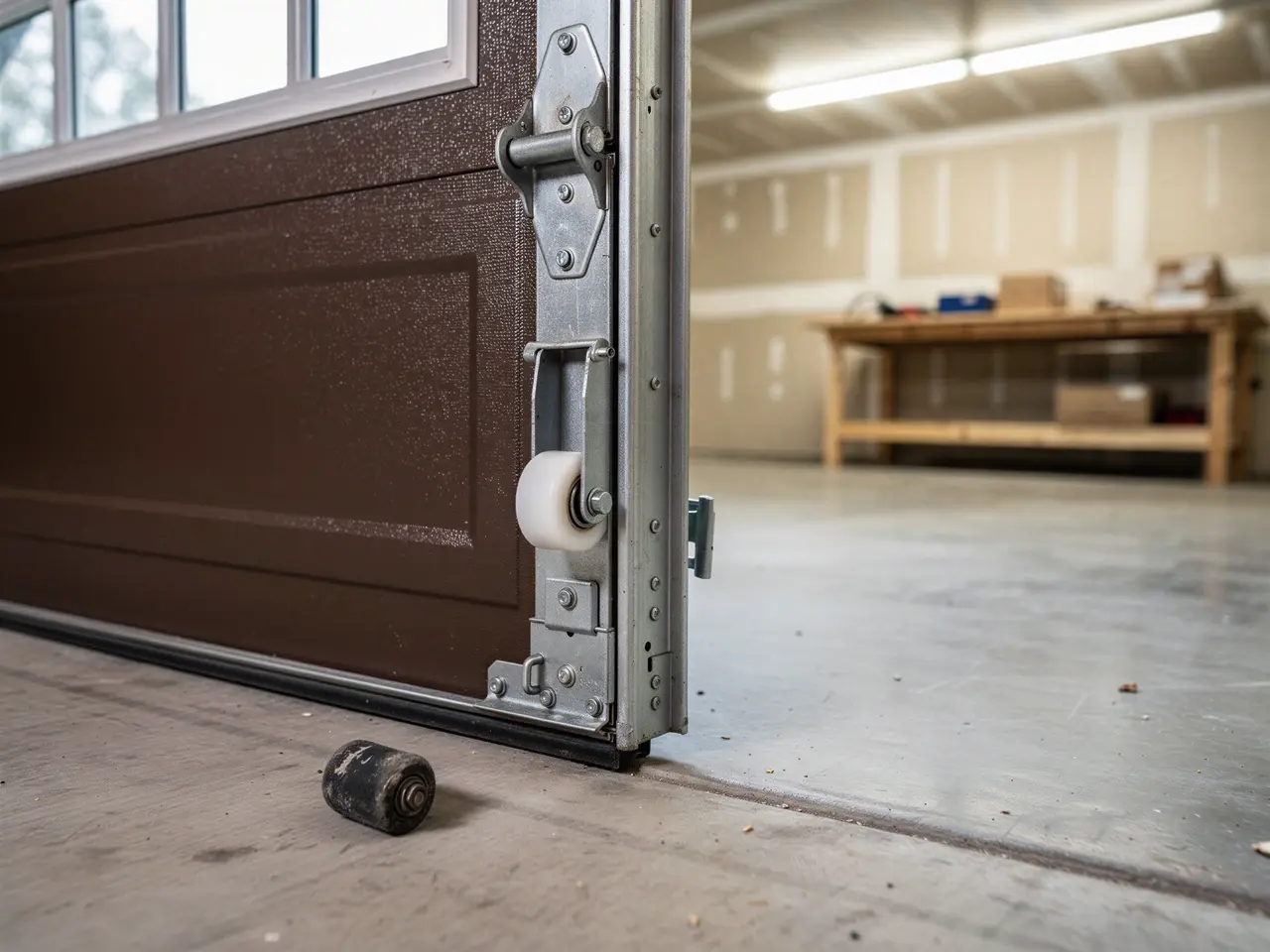
If you're the type to pull your own roller, the stem on those older units is usually a 7-inch stem, not the 4-inch stem you'll find in a big box kit. Buy the wrong one and the roller binds in the track within a week. You can check this yourself - pull one roller, measure the stem, measure the wheel diameter. If it doesn't match what's on the shelf at the hardware store, that's the moment to call someone who stocks the older size rather than forcing a modern roller into a track it wasn't built for.
Time on the Job
A straight roller swap on a door that's otherwise sound - no bent track, no cracked panel - doesn't take long once we're on site. The time sink in a neighborhood like Rosemont isn't the roller itself, it's diagnosing why the rollers failed early. On a 1976-era door, severe summer heat cycles the steel track expanding and contracting daily, and nylon rollers from that era weren't built for the UV and heat load our climate band puts on them. We see rollers that have gone brittle and split, not just worn round.
We won't quote a flat number for every job sight unseen, because a door with rust-pitted track takes longer than one with clean track and worn rollers alone. What we can tell you is that most of the time on a Rosemont call goes into inspecting the track alignment before we touch a roller, since replacing rollers on a track that's already bowed from decades of heat just buys you another failure in a year.
Booking a Visit
We run out of Rancho Cordova, about 7 miles from Rosemont, so there's no separate branch or drop-in counter here - we come to you. Rosemont's roughly 8,729 households sit inside a broader service area with 176,046 households and 87,879 owner-occupied houses, and we schedule roller jobs the same way across all of it: one visit, one truck, parts loaded based on what the door's age tells us before we arrive.
If you tell us the house is original to the mid-70s when you book, we bring the longer-stem steel rollers and the sealed-bearing option built for sustained heat, instead of guessing and making a second trip. That one detail - build era - saves more time than anything else you can tell us on the phone.
Parts We Carry
For a neighborhood built mostly in the mid-1970s, we carry steel rollers with sealed bearings as the standard swap, not the open-bearing nylon rollers that come stock in most retail kits. Open bearings pack with dust and dry out faster under the kind of sustained summer heat this area gets, and sealed bearings hold grease longer without needing a yearly service call.
We also stock the 7-inch stem length common to older torsion setups in this part of the area, since that's what fits the track spacing on doors from the 1976 era rather than the 4-inch stem common on post-1990s installs. One honest limit here: if your door turns out to need a less common roller size - some custom or imported doors use stems we don't keep on the truck - we'll have to order it, and that can push a same-week job into the following week.
The Complications
The complication in Rosemont specifically is track wear outpacing roller wear. Because the housing here runs older than the area's overall median, we find track that's been reshaped slightly by decades of thermal expansion in severe heat - not bent in an obvious way, just enough that a brand-new roller still binds or rattles in spots the old worn roller had smoothed over through years of use.
Replacing the roller without addressing that track wear just moves the noise and the wear pattern onto the new part faster than it should happen. On a household income median around $86,178 for this area, most owners want the repair that lasts, not two repairs in two years, so when the track's the real problem we say so instead of selling a roller swap that won't hold.
Frequently asked questions
Why do Rosemont garage doors need rollers replaced more often than newer builds nearby?
Houses in Rosemont mostly went up around 1976, earlier than the roughly 1982 median across the wider service area. Older steel track combined with severe summer heat here means more thermal expansion cycles over the decades, which wears rollers and slightly reshapes track faster than in newer construction.
Do you carry rollers that fit older Rosemont doors on the truck?
Yes, for the common 7-inch stem steel rollers with sealed bearings found on doors from the mid-1970s era typical of this neighborhood. Less common stem sizes on custom or imported doors sometimes need to be ordered, which can add a few days to the job.
How far is Rosemont from your shop?
We're based in Rancho Cordova, about 7 miles from Rosemont. We don't keep a separate location in Rosemont itself - every job here is a truck visit from our Rancho Cordova shop.
Can a bad roller actually be a track problem instead?
Often, yes, especially on older Rosemont doors. If the track has slightly warped from years of heat cycling, a new roller can still bind or rattle in the same spots. We check the track before replacing rollers so you're not paying for the same fix twice.
Book garage door service in Rancho Cordova
Call now or request a quote - tell us what the door is doing and where you are.