
Rancho Cordova, CA · Garage Door Service
Roller Replacement for La Riviera's 1974-Era Garage Doors
La Riviera homes mostly date to 1974, a decade ahead of the area's 1982 median. That gap changes which rollers wear out and why. Service from Rancho Cordova, 6 miles out.
- Repairs & new doors
- Springs & openers
- Serving 5 nearby communities
How It Shows Up
Rancho Cordova's service area runs from houses built in 1962 clear through 2004, with a median around 1982. La Riviera sits ahead of that curve - its housing stock centers on 1974, close to a decade older than the area median. That matters because 1974 construction usually means the original garage door track and roller setup is either still in place or was replaced once, decades ago, with whatever matched the opening at the time.
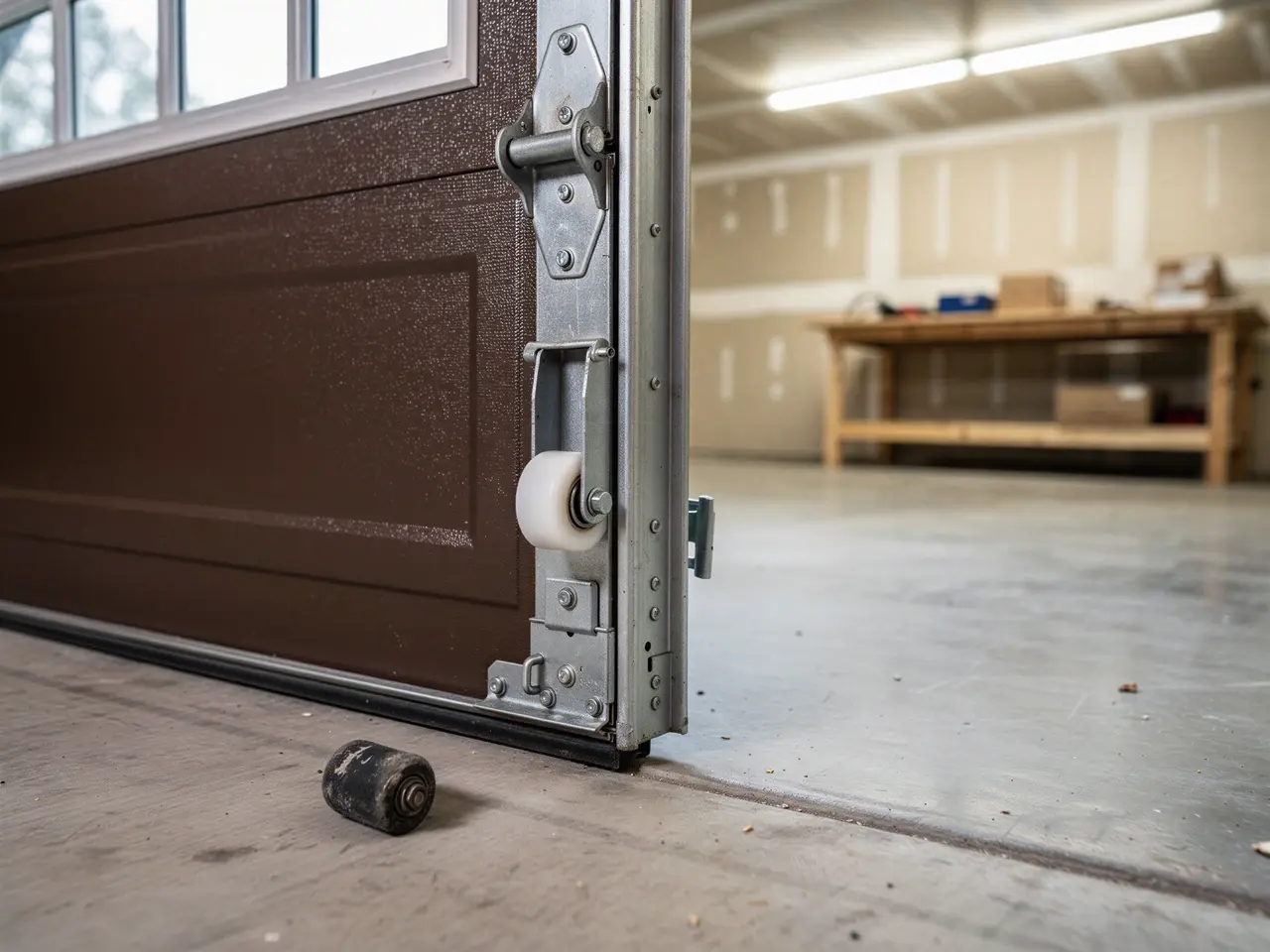
The symptom here is a grinding or popping noise as the door travels, worse at the top of the run where the curved section of track takes over from the straight. On a door this age, the rollers are often steel on a stamped bracket, not the sealed nylon rollers that became standard later. Steel rollers don't absorb heat the way nylon does, and over La Riviera's summers that stiffness shows up as noise and eventually as a roller that flattens on one side and binds in the track. If you're hearing it only on the first open of the day, that's the roller, not the spring.
A second pattern on 1974-era doors: the track itself has worn a groove from forty-plus years of the same roller edge riding the same spot. New rollers on an old groove just wear fast again.
Doing It Yourself
Swapping a roller looks simple - pull the retaining bracket, slide the old roller out, slide a new one in - and on some panels that's exactly how it goes. The trouble on a house this age is the bracket itself. Forty-plus years of door-open/door-close cycles work the screws loose in the jamb, and on steel track from that era the bracket is sometimes riveted rather than bolted, which means a roller swap turns into a bracket repair you didn't plan for.
Tension is the other issue. Any roller on the bottom bracket of a door with a torsion or extension spring sits under load. Pull the wrong bracket on a door that's never had the spring serviced and the door can drop or the cable can jump the drum. This is where we draw the line: if your spring looks original to the door - rusted, no date sticker, cable frayed - we won't talk you through doing it yourself over the phone, and we wouldn't do a roller swap on-site without checking the spring first either. That's not us protecting the job, that's the actual order of operations.
If the door is quiet except for one roller and the track shows no grooving, a careful DIY swap on that single roller is reasonable. Past that, you're guessing at hardware you can't fully see from the garage floor.
Why This Fails Locally
Severe heat is the climate reality across this whole service area, and La Riviera's older steel-roller stock feels it more than newer builds do. Nylon rollers - common on doors installed from the 1980s onward - expand and contract with heat and cold, which keeps them riding the track evenly. Steel rollers on a bearing don't flex the same way, and when the bearing dries out from decades of heat cycling, the roller starts to ride off-center. That off-center ride is what grooves the track, and a grooved track is what makes a brand-new roller wear out again inside a year instead of lasting a decade.
At $91,111 median household income, replacement decisions in La Riviera tend to favor doing the job right once rather than deferring it - a full roller set with matching bracket hardware, not a single roller patched into a worn track. With roughly 4,484 households in the area, there isn't a dedicated inventory of 1974-spec steel brackets sitting on a shelf; the truck carries common nylon roller sets and the brackets that fit most tracks, and anything genuinely original gets sourced before the visit, not improvised on the spot.
Time on the Job
We run this job out of Rancho Cordova, 6 miles from La Riviera, so the visit itself isn't a walk-up - it's a scheduled call with the right roller set and bracket hardware already on the truck based on what you tell us about the door's age and noise. A standard roller replacement, once we're on-site and the track isn't grooved, runs well under an hour for a full set on a double door.
Where the time goes on a 1974-era door is diagnosis before the first roller comes off - checking the track for wear, the spring for age, and the brackets for whether they're riveted or bolted. That ten minutes up front is what keeps the job from turning into a return visit. If the track is grooved badly enough that new rollers won't ride true, that's a track replacement, not a roller swap, and we'll say so before any hardware comes off the door.
Frequently asked questions
Why do my rollers sound worse in summer?
If your rollers are the older steel-on-bearing type common on 1974-era doors, they don't flex with heat the way nylon rollers do. The bearing dries out and the roller rides slightly off-center, which is louder and wears the track faster during the hottest stretches of the year.
Can you just replace one roller instead of the whole set?
Sometimes, if the track isn't grooved and the rest of the rollers are sound. But on a door built around 1974, the rollers usually wore in together, so replacing one often just moves the noise to the next-worst roller within a few months.
Do you keep a truck stationed in La Riviera?
No - we run this job from Rancho Cordova, about 6 miles away, and bring the roller and bracket hardware based on what you describe about the door's age and sound before we schedule the visit.
Is a grooved track a roller problem or a track problem?
Once a track has a visible groove, it's a track problem. New rollers will ride the groove too and wear out fast. At that point replacing just the rollers is a short-term fix, not a repair that lasts.
More garage door services in La Riviera
Book garage door service in Rancho Cordova
Call now or request a quote - tell us what the door is doing and where you are.