
Rancho Cordova, CA · Garage Door Service
Spring Repair for La Riviera's 1970s Garage Doors
La Riviera's homes mostly date to the early-to-mid 1970s, which means a lot of original extension-spring setups still running on worn pulleys. We drive out from Rancho Cordova, 6 miles away.
- Repairs & new doors
- Springs & openers
- Serving 5 nearby communities
How It Shows Up
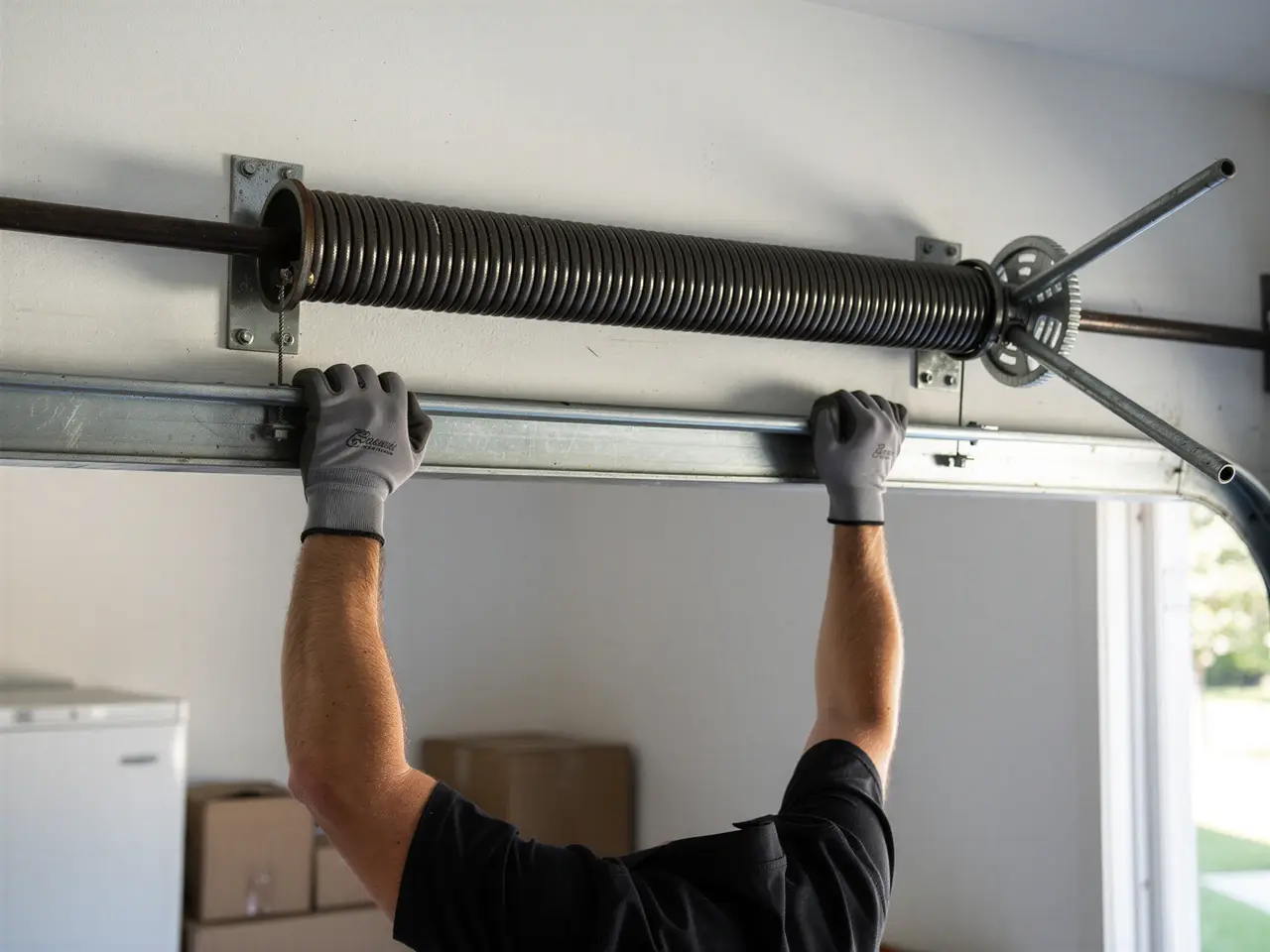
The call we get most from La Riviera starts the same way: the door won't budge, or it slams down the last foot of travel like something let go. That's usually a spring that's given out, and in this pocket of the service area it's often an extension spring - the kind that runs along the horizontal track above the door, not a torsion spring mounted on a shaft over the opening.
That's not a guess. La Riviera's housing stock centers on 1974, which puts it on the earlier edge of the broader 1962-2004 build window across the service area. Builders in the early-to-mid 70s leaned heavily on extension spring setups because they were cheaper to install, and a lot of those original doors and their hardware are still in place. When one of those springs fails, it tends to fail suddenly, with a loud bang, because there's no containment cable running through the coil unless someone retrofitted one later.
Doing It Yourself
We'll say this plainly: don't try to replace a spring yourself, torsion or extension. A wound torsion spring holds enough stored force to break a wrist or worse, and even an extension spring under tension can whip loose hardware across a garage. This isn't a caution we print to sound careful - it's the actual injury pattern this trade sees.
What you can safely check yourself: whether the spring is visibly separated or stretched beyond its coils, whether there's a safety cable threaded through an extension spring (older La Riviera installs often don't have one), and whether the door is noticeably harder to lift by hand than it used to be. That last sign means the spring is weakening, not gone yet - which is actually the better time to call, before it snaps and takes a cable or a panel with it.
Why This Fails Locally
Two things stack up against La Riviera's older extension-spring doors. First, the age of the hardware itself - a 1974-built house has had roughly fifty years for pulleys, end bearing plates, and spring hooks to wear, rust, or get replaced with mismatched parts over time. Second, the climate here runs a severe heat band for a good chunk of the year, and repeated heat cycling fatigues spring steel faster than a mild climate would. A spring rated for a certain number of cycles gets there sooner when it's baking in a hot garage for months at a stretch.
La Riviera is a smaller pocket than the service area overall - around 4,484 households here versus 176,046 across the whole territory we cover - so this isn't a high-volume corridor for us. But the pattern holds: older extension hardware plus sustained heat is a specific combination, and it's why a spring that looks fine in spring can let go by August.
Time on the Job
We come out to La Riviera from Rancho Cordova, about 6 miles away, so we're not claiming a local shop on the corner - just a short drive. A straightforward spring swap on a single door, once we're there with the right part, generally doesn't eat the whole visit; the harder part is matching an extension spring's wire gauge and length to a decades-old setup if the original isn't marked, which sometimes means we're sourcing a spring rather than grabbing a universal one off the truck.
If the door has two torsion springs instead (not every house here is the same), we always replace both at once even if only one broke - uneven spring age is how you get a second failure within a year. One honest limit: if the track or the end bearing plates are rusted through rather than just worn, that's a parts and labor job beyond just the spring, and we'll tell you that before we start, not after.
Frequently asked questions
Why does my La Riviera house have extension springs instead of torsion springs?
It comes down to when the house was built. La Riviera's housing dates mostly to the mid-1970s, and extension springs - mounted along the horizontal tracks - were the common, cheaper choice in that era. Torsion springs became more standard in newer construction. Plenty of these original setups are still in place.
How long does an extension spring actually last here?
It depends on use and heat exposure. The service area sits in a severe heat climate band, and repeated heat cycling fatigues spring steel faster than a mild climate does. A fifty-year-old spring that's never been replaced is working on borrowed time regardless of how it looks.
Do you keep a truck stocked for La Riviera calls?
We work out of Rancho Cordova, about 6 miles from La Riviera, and bring common spring sizes with us. If your door uses an older or non-standard extension spring that isn't clearly marked, we may need to confirm the size before completing the swap.
Is it cheaper to fix one spring or replace both?
If you've got a two-spring torsion system, we replace both together even when only one failed - the other is close behind on wear and leaving it invites a second breakdown soon after. For a single extension spring door, it's usually a one-spring job unless the opposite side is also showing wear.
More garage door services in La Riviera
Book garage door service in Rancho Cordova
Call now or request a quote - tell us what the door is doing and where you are.